
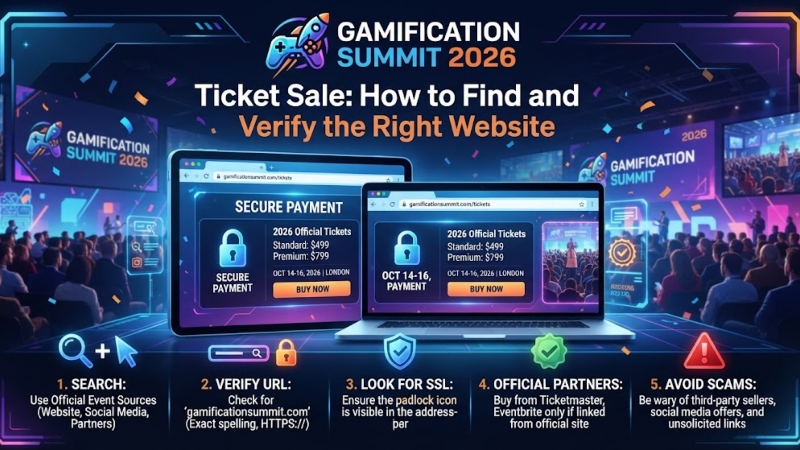
If you have searched for the site for ticket sale GamificationSummit, you may have noticed that several websites and pages discuss the event and its ticketing process. That can make it difficult to know which source you should trust.
The safest approach is not to choose a ticketing website simply because it appears first in search results. Instead, verify the event details, organizer, ticket page, payment method, and refund policy before entering your payment information.
This guide explains what to check before purchasing a GamificationSummit ticket.
Why the Right Ticketing Site Matters
A ticketing website should make the buying process clear, secure, and easy to understand.
Before purchasing, look for basic information such as the event date, location or online format, organizer details, ticket prices, payment methods, and refund terms.
Be more careful with unfamiliar websites that provide limited contact information, unclear pricing, or payment methods that offer little protection.
Step 1: Confirm the Event Details
Start by checking the event itself rather than the ticket page.
Look for:
- Official event name
- Date and time
- Location or virtual format
- Organizer information
- Speaker or agenda details
- Official contact information
Compare these details across more than one reliable source. If different websites provide conflicting dates, locations, or organizer names, investigate further before buying.
Step 2: Check the Organizer
The organizer is one of the most important details to verify.
Look for a consistent organization or individual behind the event. Check whether the organizer has a history of running events and whether its information appears consistently across official pages and other independent sources.
Do not assume that a website is official simply because it uses the event’s name in its domain.
Step 3: Verify the Ticketing Website
Once you identify the event and organizer, check where the organizer directs attendees to purchase tickets.
A trustworthy ticketing page should clearly show:
- Ticket prices
- What each ticket includes
- Event date and location
- Payment options
- Refund or cancellation policy
- Terms and conditions
- Customer support information
HTTPS is useful for protecting information during transmission, but HTTPS alone does not prove that a website or event is legitimate.
Step 4: Be Careful With Third-Party Ticket Pages
Third-party ticketing platforms are not automatically unsafe. However, you should verify that the specific event listing actually belongs to the organizer.
This is especially important when several websites sell or advertise tickets for the same event.
Before paying, compare the third-party listing with information from the event organizer. Check the event name, date, location, ticket type, and price.
Step 5: Understand Gamified Ticket Sales
Some event marketers use gamification to encourage people to buy tickets.
These techniques can include:
- Early-bird rewards
- Countdown timers
- Referral programs
- VIP upgrades
- Digital badges
- Limited ticket tiers
- Leaderboards or competitions
Gamification itself is not a sign of fraud. Real organizers can use these techniques to increase engagement.
However, urgency can also pressure people into making decisions too quickly. If a website combines aggressive countdowns with unclear organizer information, unusual payment methods, or no refund policy, slow down and verify the offer first.
Step 6: Check the Payment Method
Payment protection is another important factor.
Credit cards can provide useful dispute options depending on your card issuer and location. Established payment services may also provide additional transaction records.
Be particularly cautious if a seller insists on:
- Cryptocurrency payments
- Direct bank transfers
- Gift cards
- Other difficult-to-reverse payment methods
A professional-looking checkout page does not eliminate payment risk.
Step 7: Check the Refund Policy
Read the refund and cancellation terms before purchasing.
A legitimate ticketing page should clearly explain whether tickets are refundable, transferable, or subject to specific cancellation conditions.
Do not assume that every event allows refunds simply because you purchased through a well-known payment or ticketing service.
In-Person vs. Virtual Events
The verification process can also depend on the event format.
For an in-person event, check whether the stated venue is real and whether the event information matches what the venue publishes or confirms.
For a virtual event, check the official event page, streaming platform, schedule, and instructions provided after registration.
In either case, make sure the information comes from a source connected to the event rather than an unrelated promotional page.
What If Multiple Websites Claim to Sell GamificationSummit Tickets?
This is where you should slow down.
Search results may contain articles, ticketing platforms, promotional pages, archived event information, and websites using similar names.
Do not select a ticket seller only because it ranks highly on Google.
Instead:
- Identify the event organizer.
- Find the organizer’s current official website or verified social account.
- Check where the organizer directs people to purchase tickets.
- Compare the ticket details.
- Review the payment and refund policies.
- Only then decide whether to purchase.
Protect Yourself Before and After Buying
A few simple steps can reduce the risk of problems:
- Use a payment method with dispute options when available.
- Save your confirmation email.
- Keep a screenshot of the ticket price and purchase details.
- Save the event’s refund policy.
- Check your ticket information immediately after payment.
- Avoid purchasing through unsolicited social media messages.
- Never send payment simply because someone claims to be an event representative.
What If You Cannot Verify the Ticket Source?
If you cannot establish who operates the event, where it is taking place, who sells the tickets, or what happens if the event is cancelled, do not rush to purchase.
Take time to verify the information through the organizer, venue, or other reliable sources.
A legitimate ticket purchase should not require you to ignore obvious inconsistencies or pressure you into making an immediate payment.
Frequently Asked Questions
How do I know if a site for ticket sale GamificationSummit is legitimate?
Check the organizer, event details, ticket information, payment method, refund policy, and contact information. Compare the listing with the organizer’s current official information before paying.
Should I buy directly from an event website or a major ticketing platform?
Either can be legitimate. The important thing is to verify the specific event listing and make sure it connects back to the actual organizer.
Is HTTPS enough to prove that a ticket website is safe?
No. HTTPS helps protect information sent between your browser and the website, but it does not prove that the website operator or event itself is legitimate.
What payment method is safest for event tickets?
A credit card can provide useful dispute protections depending on your issuer and country. Avoid irreversible payment methods when you cannot independently verify the seller.
What should I do if different websites show different event details?
Treat the inconsistency as a warning sign. Check the organizer’s current information and compare the date, location, ticket price, and event details before purchasing.
Are gamified ticket-selling methods a scam?
Not necessarily. Early-bird offers, referral rewards, countdowns, and VIP incentives can be legitimate marketing techniques. The important thing is to verify the event and seller before making a payment.
Conclusion
Finding the right site for ticket sale GamificationSummit is not simply about choosing the first result that appears in search.
The better approach is to verify the event, identify the organizer, confirm the ticket seller, review payment protections, and read the refund policy before purchasing.
Gamified features such as countdowns, rewards, referral programs, and limited ticket tiers can be legitimate marketing tools, but they should never replace basic verification.
If the organizer, ticket seller, payment process, and event details all line up, you can make a more informed decision. If important details remain unclear, it is better to wait than to rush into a payment.